You know a maxxing has fully arrived when a sovereign state issues documentation for it.
In early 2024, Indonesia introduced the E33G Remote Worker Visa — a proper limited-stay permit, a KITAS, valid up to a year, for people earning their money entirely outside the country. You need to demonstrate roughly $60,000 a year in foreign income. In exchange you stop being a tourist on a rolling 60-day stamp and become a temporary resident of Bali.
That is the highest honour available to any maxxing: not a trend piece, not a Merriam-Webster entry — paperwork. Somebody in an immigration ministry looked at what was happening on that island and concluded it needed its own legal category.
What they actually maxxed
Around 30,000 digital nomads and expats now work from Bali, concentrated in Canggu, Ubud and Uluwatu. From the outside this reads as a lifestyle choice. It isn’t. It’s a single variable, identified and then driven as far as it will go: quality of life per unit of income earned somewhere else.
Everything downstream follows from that one decision. A one-bedroom in Canggu or Ubud runs $800 to $1,500 a month — real money locally, a rounding error against a salary denominated in dollars or euros. A day pass at a coworking space costs 150,000 to 280,000 rupiah; a dedicated desk for a whole month is about 3,000,000 rupiah, roughly what a single coworking day costs in London. The arbitrage isn’t a perk of the move. The arbitrage is the move.
And the daily shape of it is genuinely enviable: sunrise surf, a hard focus block in air-conditioning while the heat builds, sunset networking that is somehow also just drinks. Anyone who has optimised their morning routine on a whiteboard should recognise that as the finished product.
The infrastructure grew because they committed
The part outsiders get wrong is assuming these people found a paradise. They built the working conditions, by showing up in sufficient numbers and with sufficient stubbornness that supply arrived to meet them.
Canggu now has the densest concentration of coworking spaces, Western cafés, surf schools and yoga studios on the island — The Dojo, Tropical Nomad, Outpost, each a coworking-and-coliving hybrid that simply did not exist when the first wave turned up. Fibre is standard in villas. The spotty-internet era that defined nomadism for a decade is over in the main hubs, and it ended because enough people bet their careers on it ending.
That’s the pattern this site keeps finding. Spainmaxxing optimises a place you visit. Balimaxxing optimised a place until the place optimised back.
The honest accounting
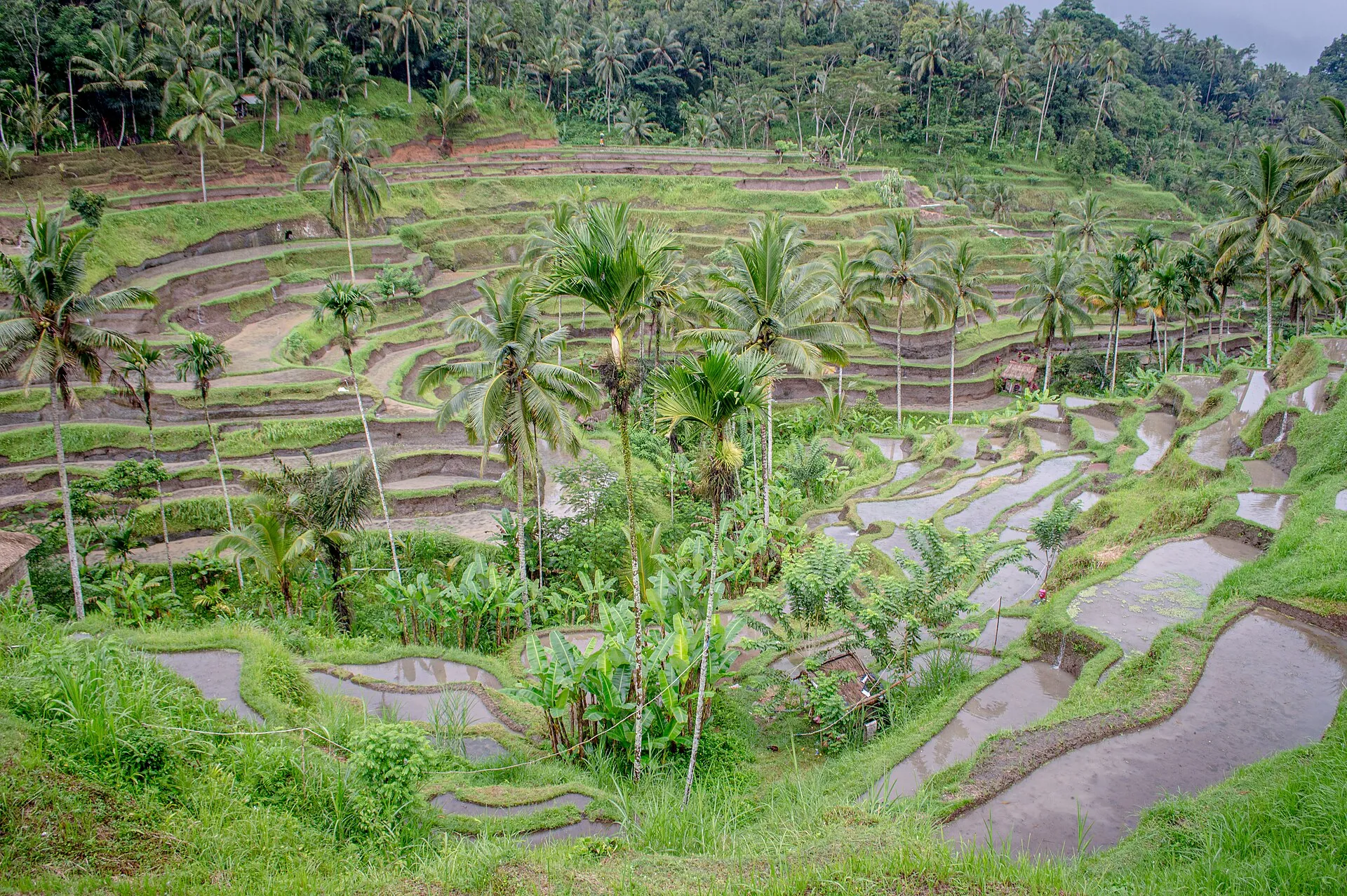
None of which makes it frictionless, and the practitioners are the first to say so. Traffic on the Canggu strip is legitimately terrible — Bali scores near the bottom of comparative databases on exactly that measure. Rents have roughly doubled since 2021. Rice fields get paved monthly. The village that appeared on the first Instagram posts in 2015 is now a working town for remote professionals, which is a different and busier thing.
But notice what that list actually describes: the cost of winning. Prices rise because demand arrived. Traffic thickens because the population grew. Nobody builds fibre into villas in a place nobody wants to be. Every complaint on that list is a receipt for the same achievement.
Ten years ago these were people with laptops arguing on forums about whether you could really run a business from a beach. Today there is a visa class, an income threshold, a coworking economy and a queue.
The forums were right. The paperwork proves it.


