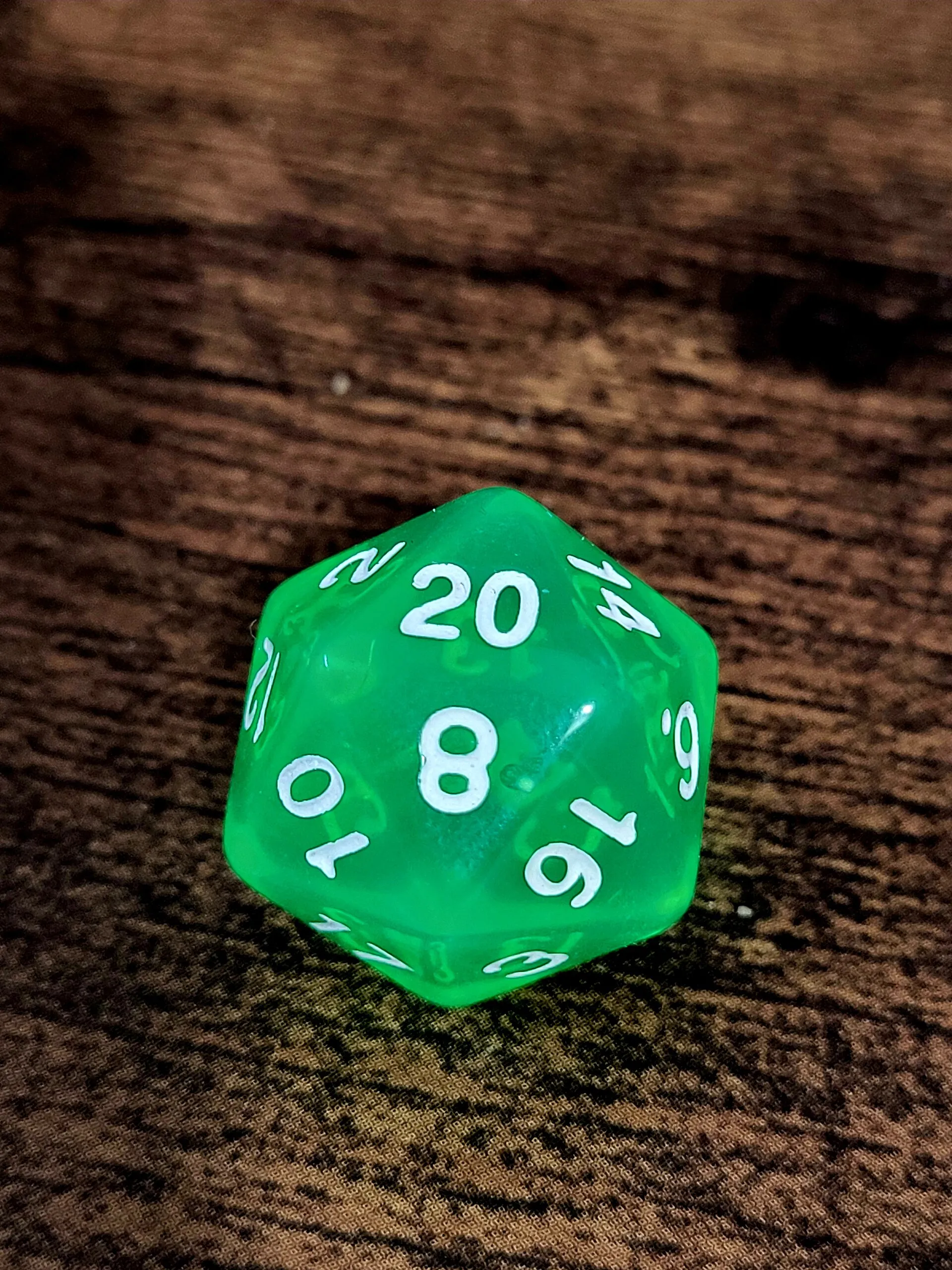
The suffix is everywhere now. You can looksmax, sleepmax, rizzmax, moneymax, and — if you’ve spent any time near a terminal — tokenmax. It has escaped its origin so completely that most people using it have no idea it started at a tabletop covered in twenty-sided dice. Here’s the whole lineage, because the etymology is quietly the best explanation of the mindset.
Step one: the dice
The root idea is older than the internet. It comes from min-maxing, gaming slang with roots in 1940s game theory’s “minimax” that got its real life in 1970s and ’80s tabletop RPGs like Dungeons & Dragons. To min-max is to pour every available resource into one stat — dump charisma, max strength — optimising for raw mechanical advantage at the cost of balance. You build a character that is devastating at exactly one thing and useless at everything else.
Hold onto that, because it never stops being the operative logic. Maxxing has always meant: sacrifice the rounded whole to spike one number.
Step two: the jump to real life
In the early 2010s, incel message boards — the coverage consistently names PUAHate, SlutHate and Lookism — took that gaming verb and pointed it at themselves. The breakout coinage was looksmaxxing: maximising physical attractiveness to raise your “sexual market value,” a phrase borrowed wholesale from the same forums’ pseudo-economic worldview.
This is the uncomfortable root, and we don’t paper over it: the vocabulary was born in a genuinely bleak corner of the internet. What happened next is the interesting part.
Step three: the extra X, and why it matters
Notice the spelling. Not “looksmaxing” — looksmaxxing, with two X’s. Linguists tracing the word note the doubled X is likely influenced by internet words like doxxing. That second X is doing real work: it visually marks the term as native to online subculture, not a normal English word. It’s a little flag that says this came from the forums. Merriam-Webster now catalogues the slang; the X stayed.
Step four: the schema goes productive
Here’s where it gets linguistically wild. Looksmaxxing became what researchers call the prototype — the template other coinages copied. First by direct analogy (sleepmaxxing, gymmaxxing), then through an increasingly productive derivational schema: a rule flexible enough to bolt “-maxxing” onto nouns, adjectives, acronyms, even whole phrases. Once a suffix goes productive, speakers stop copying examples and start generating new ones on the fly. That’s the stage we’re in now — you can invent a maxxing nobody’s said before and be understood instantly.
That productivity is exactly why this site exists: the suffix outran its origin. It spread through Reddit “rate me” threads and then all of TikTok, until half the people using it meant it sincerely and the other half meant it as a joke — often in the same sentence.
The map
Strip it down and every maxxing is the same move — pick a stat, spike it — applied to a different axis:
- The face axis — looks, jaw, skin, teeth, hair
- The body axis — gym, height, bone
- The signal axis — rizz, voice, style, status, smell
- The system axis — sleep, brain, money, tokens
Why the suffix won
Language borrows the word it needs, and the 2020s needed this one. We live optimised — quantified, ranked, A/B-tested, self-improved. “-maxxing” is the perfect little engine for that anxiety because it carries the whole worldview in four letters: everything is a stat, and every stat can be maxed.
And the D&D players got there first, in 1982. Min-maxing was always the expert move — the players who read the rulebook closely enough to find where the numbers actually mattered, then went all in on those. It annoyed people. It also won. Every maxxing branch since has been the same discovery: somebody works out which stat is real, commits to it without embarrassment, and gets results that look like luck from outside.
If you want the vocabulary that grew out of all this, we keep a dictionary.