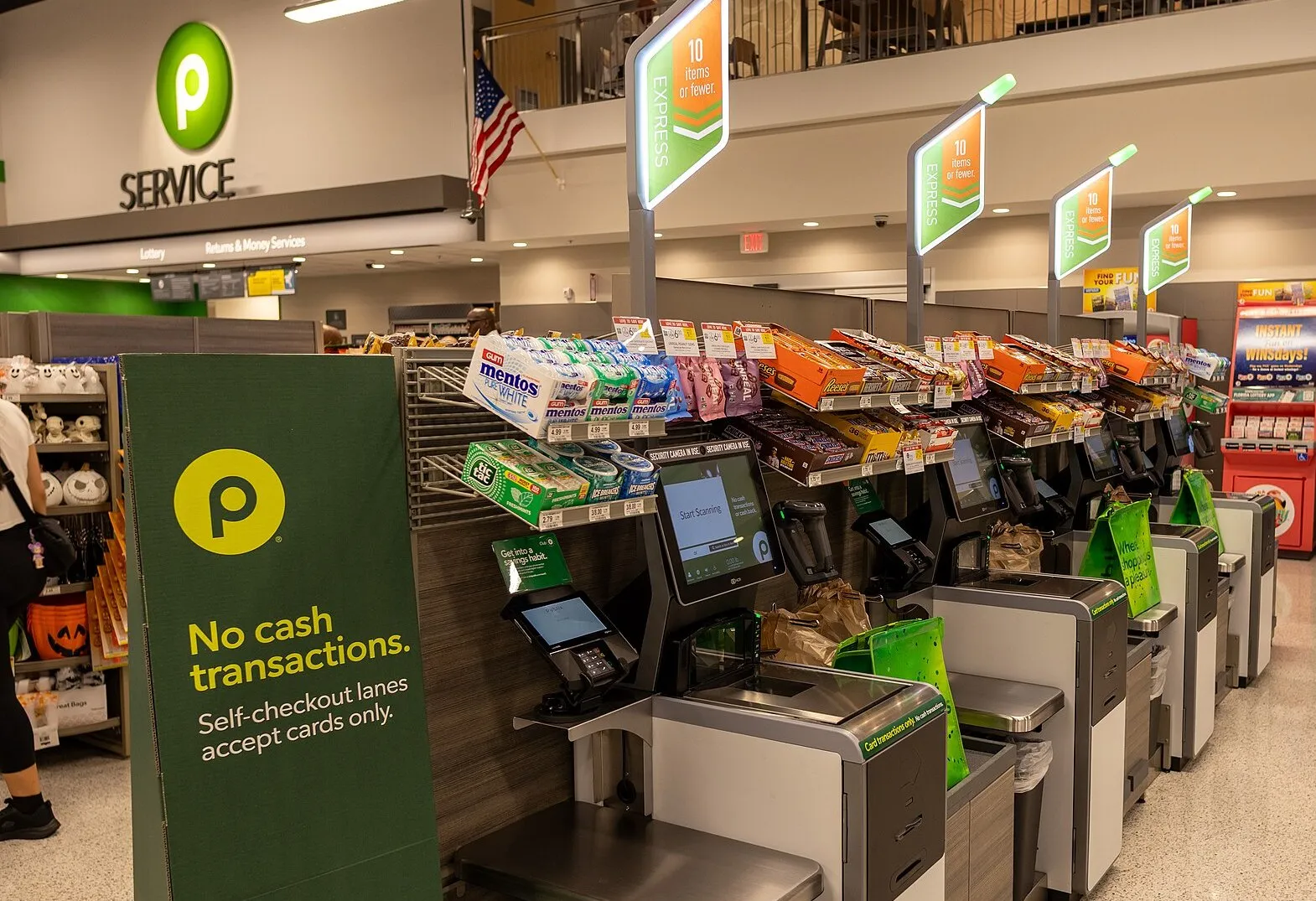
On August 6, a Fortune columnist hit the problem every writer eventually hits: the behaviour existed and the word didn’t. Catherina Gioino was writing about delivery apps, self-checkout, order-ahead — the whole apparatus that lets you move through a day without addressing a single human being — and she needed a noun for it.
She reached for the suffix. “Fifty years later, that cultural shift has embraced the convenience economy, creating what I’ll go ahead and call ‘me-maxxing.’”
That is a coinage, in Fortune, in a business column, with “I’ll go ahead and call” doing the work of a birth certificate. Three days later @unusual_whales — a markets account that mostly posts options flow and earnings — put the headline in front of its audience.
“We’re ‘me-maxxing’ so much, we’re saying 30% fewer words a day than we did 20 years agp,” per FORTUNE
— unusual_whales (@unusual_whales) August 9, 2026
The suffix just learned to subtract
Here is why this one goes in the book. Every -maxxing term in the language points the same direction: more. Looksmaxxing, more face. Heightmaxxing, more height. Patriotmaxxing, more country. The field guide traces the whole family back to min-maxing at the D&D table, where the entire game was pushing a number up.
Me-maxxing points the other way. The quantity being maximised is your own absence — errands routed around conversation, the count of daily human exchanges successfully avoided. Do it well and less of you happened. It is the first coinage in the family where mastery looks like subtraction, and Gioino got there by accident, because the suffix is now the default tool for naming any behaviour somebody is doing too much of.
The receipts
The number Fortune hung its headline on is real research, and it is good research. Valeria Pfeifer (University of Missouri–Kansas City) and Matthias Mehl (University of Arizona) pooled 22 studies covering roughly 2,200 people and published in Perspectives on Psychological Science. Participants wore recorders that sampled their days; the pooled estimate of daily spoken words fell by about 338 a year, every year, from 2005 to 2019.
The generational split is the part that should have been the headline. Under-25s shed 451 words a year. Everyone 25 and over shed 314. That is a 44% steeper decline for the young, which is a genuinely startling sentence about a cohort that is supposedly always on its phone talking.
Now check the headline
“…30% fewer words a day than we did 20 years ago.”
The study runs 2005 to 2019. Fourteen years, not twenty — and Fortune’s own body copy says so plainly: “Over the 14 years covered by their data.” The data also stops in 2019, seven years before the column ran. Whatever the spoken word did through the pandemic and after, this study did not measure it. The headline invites you to compare your Tuesday against a Tuesday in 2006. Nobody counted your Tuesday.
Then the percentage, in Fortune’s own sentence: “that adds up to nearly a 30% (28%) drop in daily spoken words, from an average of 15,959 words a day in 2007 to 12,792 in the most recent estimate.”
Run the two figures printed inside that sentence. 15,959 down to 12,792 is a fall of 3,167 — 19.8%. Not 28, not nearly 30. The 28% is defensible against the study’s other endpoints: TIME reported roughly 16,600 words a day in 2005 falling below 12,000 by 2019, and that pair does land near 28%. But it is a different pair, with a different start year, spliced into the same clause. Two baselines, one sentence, and the number that made the headline is the one that isn’t sitting next to it.
None of which dents the finding. People really are talking less, the decline really is linear, and the researchers really did put recorders on 2,200 people to find out. The trend is solid. The frame around it grew about ten percentage points and six years in transit — which is, reliably, what happens to a good number on its way to a headline.
What me-maxxers actually do
Reported, not prescribed, because the practitioners here are excellent and mostly unbothered: the pharmacy app that refills without a call. The restaurant chosen partly because the QR code means nobody takes your order. The self-checkout picked when the staffed lane is shorter. The delivery instruction reading “leave at door, do not knock.” The moneymaxxing adjacency is real too — every one of those choices is priced, and the convenience premium is a line item people pay knowingly.
Nobody in that list is lonely. They are optimising, competently, for a resource the convenience economy taught them to count. The scene has spent years adding rungs to ladders. It turns out you can climb one downward and it still counts as maxxing.
The word arrived on August 6. Give it a month and somebody will be selling a course in it.